I put my camera down, closed my eyes, took a deep breath, and tried to reconnect myself to my surroundings. After a few moments passed, I suddenly could see the image in my head, and I knew just what I needed to do to make it happen.
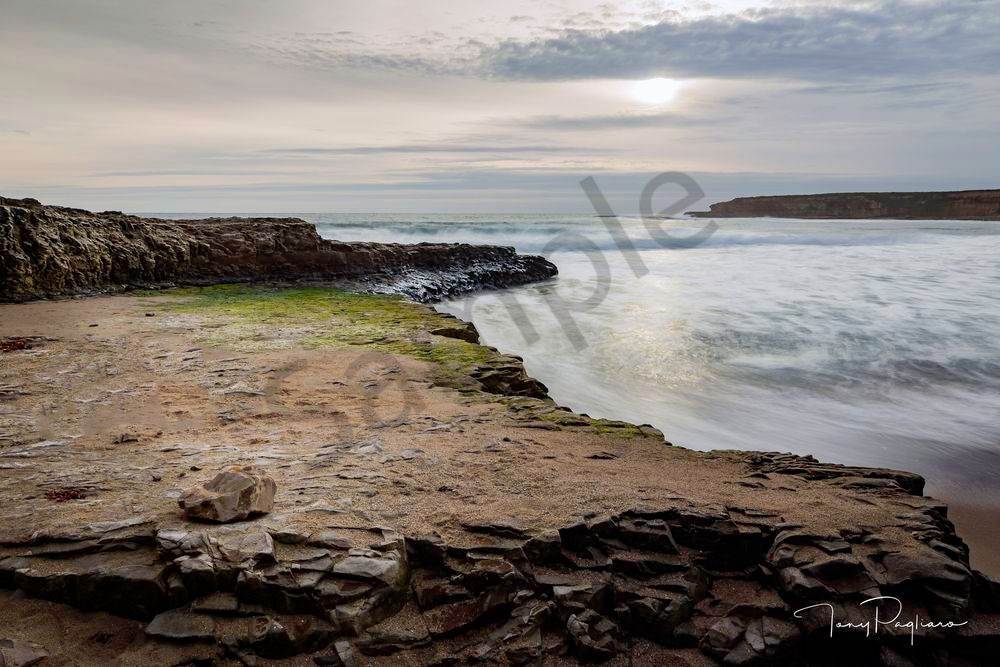
I chose a composition that would use this textured edge of the wall as the foreground, and then the natural curve of the rocks to lead the eye towards the setting sun.
The sun was going to descend below the clouds and brighten up the scene. It would still be behind a thin layer of clouds which would act as a diffuser and soften some of the harsh light.
I would add a neutral density filter to my 24MM lens to slow down the shutter speed so I could create a blurry movement of the waves as they washed ashore. This part would be the most difficult because the flow of the waves had to be just right: a soft, calm, sweeping blur that would give the photo a soothing feeling.
If I could capture the movement of the water as intended, you would be able to see the sunlight reflecting on the water, which would help draw the eye to the picture.
I dialed in my composition and placed my camera on a tripod. When the sun reached the right place in the sky and I could see a reflection in the water, I began timing the waves and pressing the shutter at what I considered to be the best moments. After a few shots, I captured this image, my favorite from the afternoon.
I titled this picture Quiescence.